
Valuenomy Research
Valuenomy Research Desk is comprised of certified financial analysts focusing on DCF valuation modeling, Indian direct taxation analysis, and quantitative equity risk management.
About the Editorial Methodology
Valuenomy Research Desk delivers rigorous fundamental analysis and mathematical valuation frameworks for retail investors in the Indian equity markets. Our research methodology combines discounted cash flow (DCF) modeling, corporate earnings quality checks, and forward-looking sector analysis.
All research publications are reviewed against prevailing SEBI regulatory norms and Indian Income Tax statutes to provide educational and unbiased financial literature.
Articles & Research Reports by Valuenomy Research

Related Party Transactions (RPT) in Indian Stocks: How Promoters Siphon Capital via Subsidiaries
- Valuenomy Research
- Valuation Guides
- 01 Oct, 2026
The Silent Drain on Minority Shareholder Wealth RPT in stocks is a method by which promoters siphon the resources of the company usually a listed entity through their private companies or unlis...
read more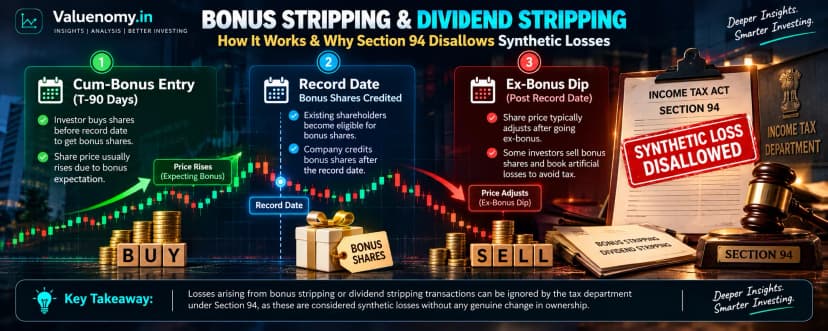
Bonus Stripping and Dividend Stripping in Indian Equities: Section 94 Rules
- Valuenomy Research
- Taxation
- 01 Oct, 2026
Tax Loss Harvesting Through Synthetic Short Term Losses For high net worth individuals family offices and active traders on Dalal Street minimizing tax obligations alongside returns optimizati...
read more
Why NSE Listed on BSE and Not on Itself: The Regulatory Conflict & SECC Cross Listing Rule
- Valuenomy Research
- Regulatory & SEBI
- 25 Sep, 2026
The Institutional Paradox of Dalal Street The public listing of the National Stock Exchange of India has created one of capital markets most enduring paradoxes The equity scrip of India s undis...
read more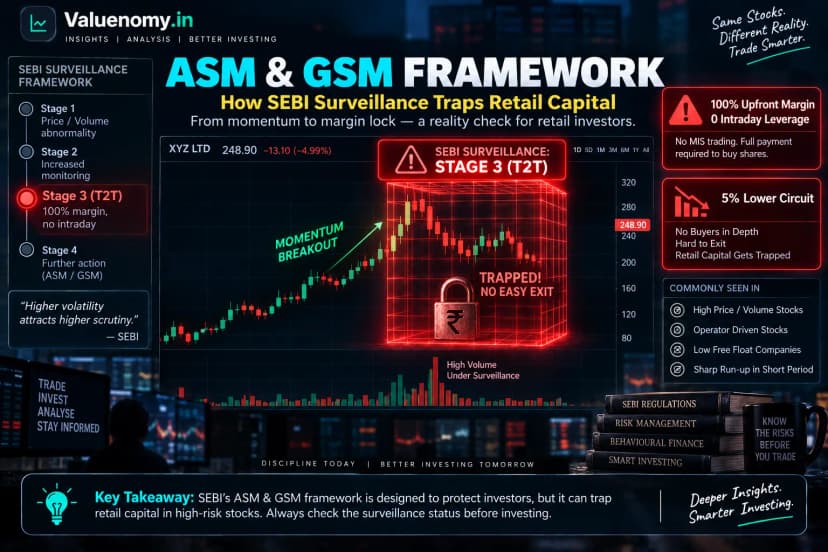
ASM and GSM Framework in Indian Stocks: How Does SEBI Surveillance Trap Retail Traders
- Valuenomy Research
- Regulatory & SEBI
- 23 Sep, 2026
The Illusion of Easy Money Every trading week in the National Stock Exchange and Bombay Stock Exchange there is an unpleasant surprise waiting for a retail market participant A breakout small c...
read more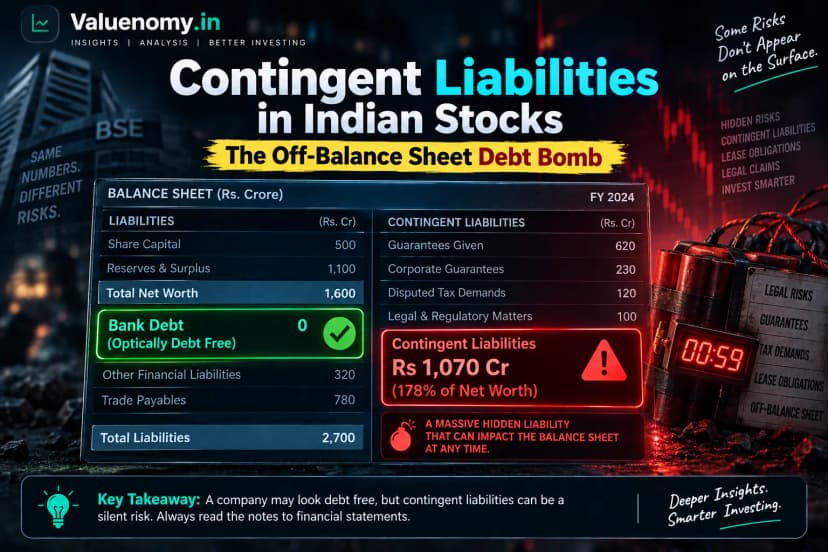
Contingent Liabilities in Indian Stocks: Off-Balance Sheet Debt Bomb
- Valuenomy Research
- Valuation Guides
- 20 Sep, 2026
The Unseen Financial Time Bomb of Indian Corporates When studying the balance sheet of companies on Dalal Street Indian retail investors make a common mistake while analyzing a company s exposur...
read more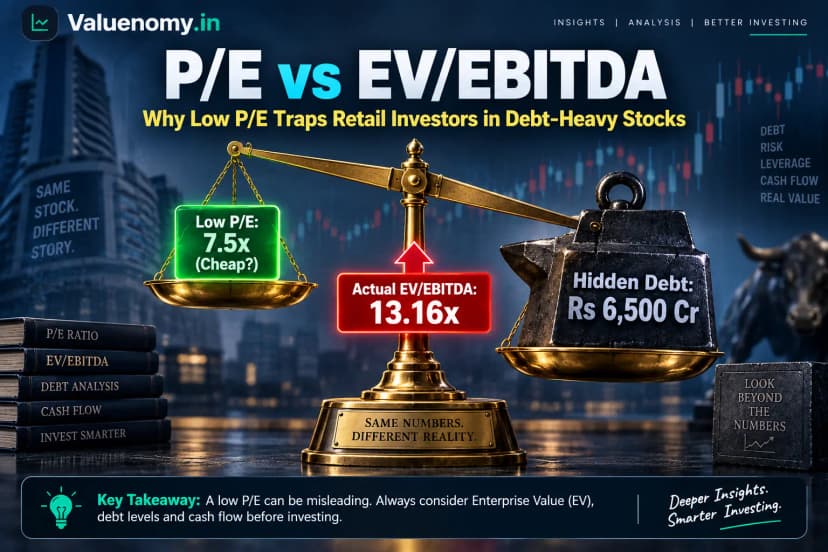
P/E vs EV/EBITDA: Why Dalal Street’s Favorite Multiple Traps Retail Investors in Debt Laden Stocks
- Valuenomy Research
- Valuation Guides
- 19 Sep, 2026
The Optical Illusion of Cheap Earnings on Dalal Street Among retail investors the Price to Earnings ratio is the most popular metric to judge the relative valuation of a stock From financial ne...
read more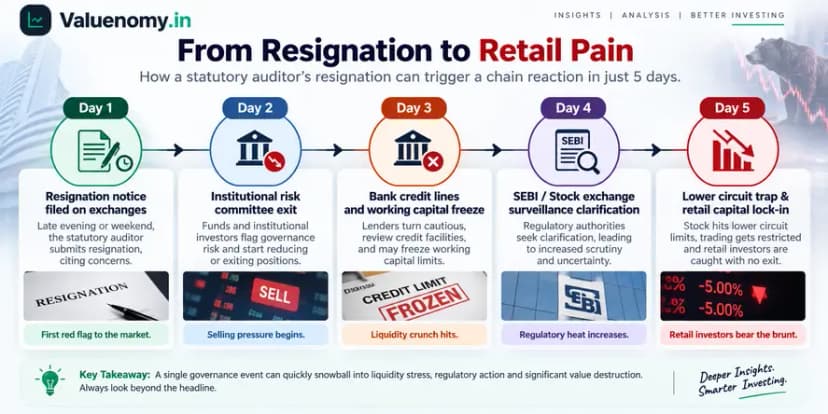
Statutory Auditor Resignation: The 5-Day Warning Signal Before Stock Crashes
- Valuenomy Research
- Regulatory & SEBI
- 15 Sep, 2026
Statutory auditor resignations are more ominous to retail shareholders than bad quarterly results Even though promoters and exec managements can fabricate convenient stories around inventory build u...
read more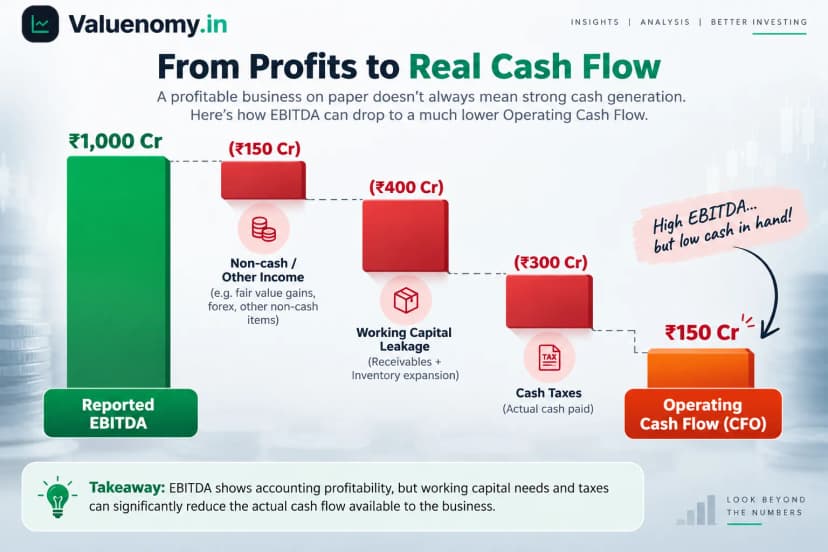
EBITDA to CFO Divergence: How Indian Companies Fake Operating Cash Flow Guide
- Valuenomy Research
- Valuation Guides
- 14 Sep, 2026
The Accrual Accounting Trap and the Mechanical Bridge In the Dalal Street few metrics are so frequently celebrated and dangerously misleading compared to Earnings Before Interest Taxes Depreci...
read more
Promoter Pledging vs Corporate Debt: The Silent Margin Call Trap in Indian Equities
- Valuenomy Research
- Trading Strategy
- 12 Sep, 2026
While evaluating risks of Indian stock markets investors ignore the promoter share pledging practice It is not captured on the company s balance sheet and can turn into a debt trap for the firm A...
read more
Stock Split vs Bonus Shares: Real Wealth Creation vs Psychological Illusion for Indian Investors
- Valuenomy Research
- Valuation Guides
- 10 Sep, 2026
Every time there is a stock split or bonus issue announcement from the National Stock Exchange of India NSE or the Bombay Stock Exchange BSE retail investors are quick to buy the stock But ever...
read more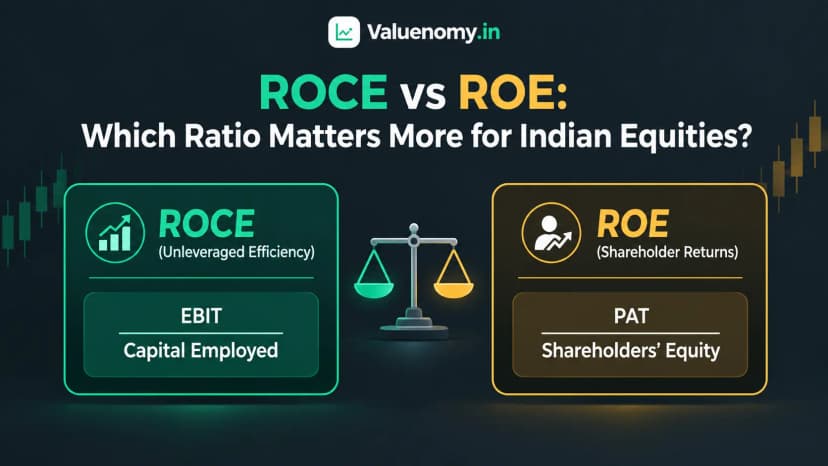
Return on capital employed (ROCE) vs Return on equity (ROE): which is more important for Indian equities?
- Valuenomy Research
- Valuation Guides
- 09 Sep, 2026
Assessing the profitability of a business is the first step in fundamental equity research While screening equities on the National Stock Exchange NSE or Bombay Stock Exchange BSE two important...
read more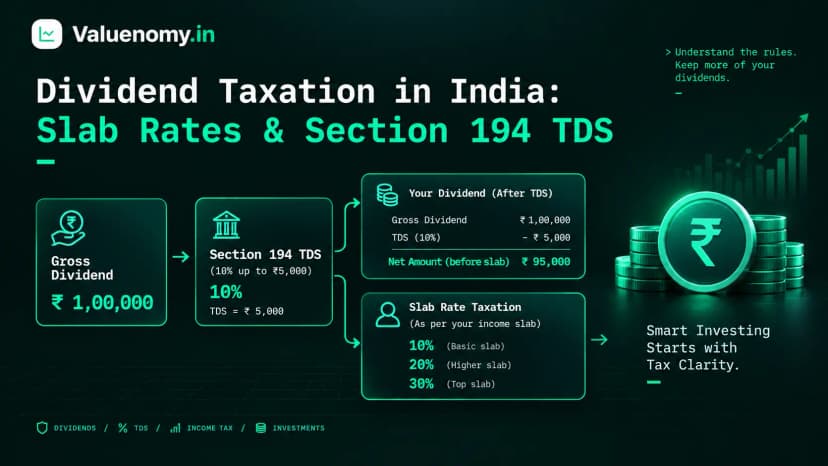
DIVIDEND TAX RULES IN INDIA: TDS SLABS, FORM 15G AND 15H, AND TAX PLANNING EXPLAINED
- Valuenomy Research
- Taxation
- 08 Sep, 2026
Overview of Dividend Taxation in Indian Equities Individual investors used to receive dividends on Indian stocks and equity funds as tax free income until the Finance Act changed the taxation rul...
read more
Tax Loss Harvesting in Indian Stock Market: Complete Guide to Offset Capital Gains
- Valuenomy Research
- Taxation
- 07 Sep, 2026
Understanding Tax Loss Harvesting For any Indian stock market investor your real gains are calculated on post tax basis Most individual investors keep checking profit and loss in the balance sh...
read more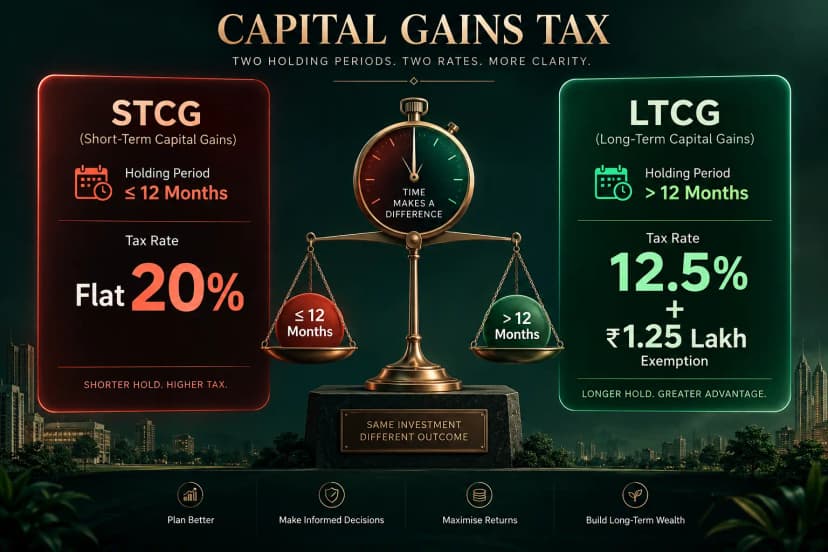
STCG vs LTCG on Shares: Rules, Rates & Tax Calculation Guide
- Regulatory
- 06 Sep, 2026
Understanding the taxation rules on equity investments is one of the most crucial pillars of wealth creation in Indian Financial Markets While earning high CAGR on your portfolio is important ther...
read more